
Avoided Emissions
Technical analysis of a product’s potential to avoid future greenhouse gas emissions relative to current processes or solutions. Our experts evaluate emerging technologies and quantify the impact for investors and customers.
- Climate + Carbon
Analysis Solution
It takes a lot of data points to determine the difference in life cycle emissions impact between gas-powered passenger cars and deploying a suite of electric vehicle charging stations. We’re up to the task.
Our rigorous data analysis processes conducted by leading technical experts will give you the hard facts you need to attract investors, win grants, and build a powerful brand.
Case Study
Quantifying the Future: Impactful Avoided Emissions Analyses
Fresh Coast Climate Solutions partnered with the Centrepolis Accelerator to provide diverse sustainability consulting services for Michigan businesses. In 2025, we conducted avoided emissions analyses for several businesses to quantify the environmental benefits of their innovative technologies and secure funding. By delivering robust, data-driven insights, Fresh Coast helped these businesses validate their sustainability claims, drive market adoption, and contribute to Michigan’s climate goals.
Key Benefits
Communicate Data to Investors
Meet Customer Requirements
Roadmap Operational Excellence
Frequently Asked Questions
What are avoided emissions, and why are they important?
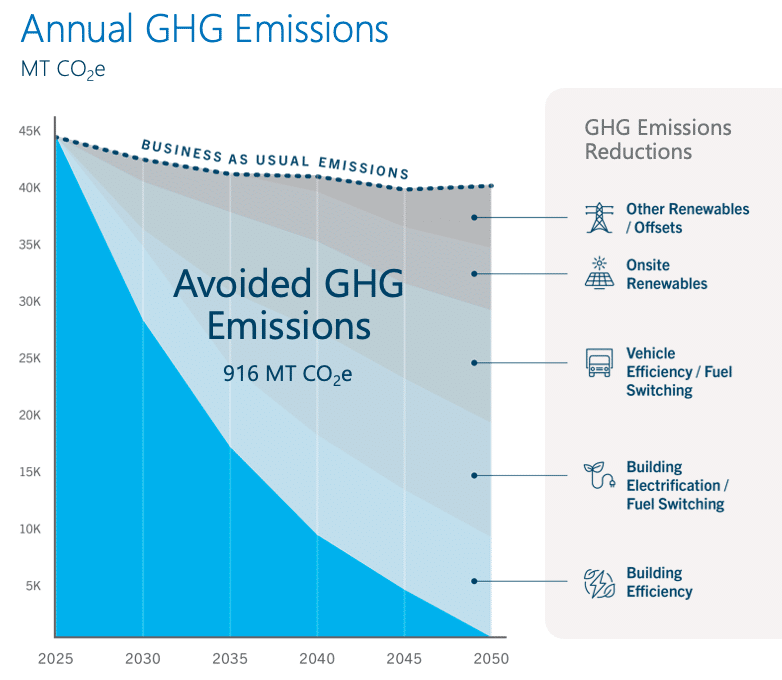
Avoided emissions refer to a product’s potential to avoid future GHG emissions relative to current solutions. Avoided emissions quantification is essential for emerging technology companies and innovators seeking to communicate their climate solution’s value proposition. While the market is shifting away from generic carbon claims, recent analysis shows strong investor and customer demand for credible, scientifically grounded climate impact data. Avoided emissions analyses provide:
- Investor Communication: Quantify your technology's potential climate impact using methodologies investors understand and trust
- Customer Acquisition: Provide early customers with defensible data on emissions reductions relative to incumbent solutions
- Market Positioning: Differentiate your climate solution in a market increasingly skeptical of greenwashing claims
- Strategic Planning: Identify which use cases and market segments offer the greatest climate impact
- Capital Raising: Support fundraising efforts with credible, third-party validated climate impact projections
How do you quantify avoided emissions?
We reference established industry methodologies, such as the World Business Council for Sustainable Development’s (WBCSD) Guidance on Avoided Emissions, to calculate the potential emissions reductions achieved by a product or process.
Can you provide examples of projects that generate avoided emissions?
Avoided emissions can be generated by an emerging technology that is designed to replace an incumbent technology or by disrupting a reference scenario. Some examples include:
- Products that increase efficiency, such as a motor that increases energy efficiency while keeping their manufacturing operations and materials sourced locally.
- Products that enable electrification, such as a battery-powered camp stove that replaces similar propane-powered cooking devices.
- The installation and use of electric charging stations to encourage employees or community members to invest in electric vehicles.