
Nature Program Support
Baseline and scenario analysis, target setting, nature transition planning, and frameworks for businesses seeking to start or optimize their nature programs.
- Water + Nature
Implementation Solution
Better for business, better for the planet.
Two pathways:
Start your nature program
We begin with a structured baseline risk and performance assessment to understand how your operations interact with local water systems and ecosystems, and where material risks and opportunities are most concentrated. These insights inform selection of an appropriate program approach and provide a clear foundation for action. From there, we support development of practical implementation and stakeholder engagement plans to initiate or prepare for alignment with relevant water and nature frameworks, such as TNFD, SBTN, or CDP, where appropriate.
Strengthen and optimize your existing program
For organizations with water or nature initiatives already in place, we support targeted gap analysis and program refinement. This includes reviewing existing activities, metrics, and governance against relevant framework expectations and leading practices. Findings are used to prioritize improvements, strengthen alignment, and advance program maturity through focused, risk-informed actions, including progression toward SBTN-aligned approaches where relevant.
Science-based targets for nature (SBTN) are not a starting point for every organization. Our risk-led approach helps determine when SBTN alignment is appropriate, where to focus, and how to proceed in a credible, phased way.
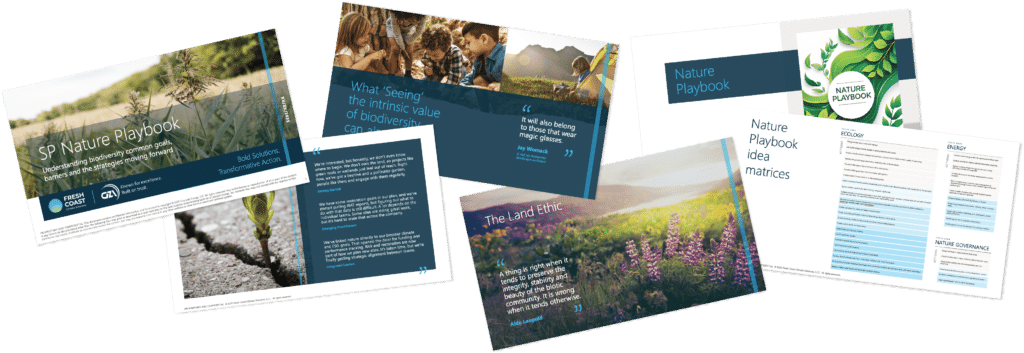
Kellen Maoney, Suppliers Partnership For The Environment
Key Benefits
Build Water and Nature Resilience
Demonstrate Nature-Positive Leadership
Enable Meaningful Stakeholder Engagement
Frequently Asked Questions
What types of nature programs do you support?
We support nature programs that help organizations understand, prioritize, and reduce their impacts and dependencies on biodiversity and ecosystems. This includes risk-led nature strategies aligned with Science Based Targets for Nature (SBTN), biodiversity impact and dependency assessments, habitat- and landscape-scale risk and sensitivity analyses, and geospatial evaluation of ecosystem co-benefits and carbon–nature interactions.
Our work helps organizations identify material risks and opportunities across operations and supply chains, strengthen resilience and credibility with investors and customers, and build a clear, science-informed foundation for nature-positive action.
What are science-based targets for nature (SBTs for nature), and how can they benefit my organization?
Science-based targets for nature are measurable, location-specific targets developed using the Science Based Targets Network (SBTN) framework. They provide organizations with a structured, science-informed approach to understanding and reducing their most material impacts and dependencies on nature across key domains such as freshwater, land, and biodiversity.
SBTs for nature help organizations identify priority locations and pressures, focus action where it matters most, and align nature strategies with credible scientific guidance. When applied appropriately, they can strengthen regulatory and investor confidence, support more effective risk management, and build trust with customers, communities, and supply-chain partners.
How will my organization benefit from a nature positive program?
A nature positive program helps your organization reduce nature-related risks, strengthen climate resilience, and stay ahead of emerging regulations and investor expectations. It improves supply-chain stability, protects critical water and biodiversity dependencies, and reduces exposure to physical, operational, and reputational risks. Organizations also benefit from clearer ESG narratives, stronger stakeholder trust, and new opportunities for innovation, cost savings, and long-term value creation through restoration, conservation, and smarter land and water management. Nature positive programs position forward-thinking organizations to manage an emerging but accelerating business risk. Organizations that integrate nature proactively will have competitive advantage over those forced to react when pressures intensify. Nature programs deliver:
- Early-Mover Advantage: Position ahead of the regulatory and stakeholder pressures that will eventually affect all sectors
- Integrated Risk Management: Address interconnected climate, water, and biodiversity risks comprehensively rather than in silos
- Long-Term Resilience: Protect supply chains and operations dependent on healthy ecosystems
- Investor Alignment: Meet the growing demands from financial institutions for nature-related risk disclosure
- Optionality: Unlock access to emerging green finance mechanisms and nature-based carbon markets
- Stakeholder Trust: Demonstrate holistic environmental responsibility beyond carbon alone
How does a Water and Nature Risk Assessment support nature-positive action?
A nature-positive program helps organizations understand and reduce nature-related risks while strengthening operational and supply-chain resilience. By addressing dependencies on water, land, and biodiversity, organizations can improve preparedness for evolving regulation, investor expectations, and physical risk.
Beyond risk management, nature-positive programs support clearer sustainability and resiliency narratives, stronger stakeholder trust, and more informed investment and operational decisions. Over time, they help organizations protect critical ecosystems, identify efficiency and innovation opportunities, and build long-term value by integrating nature considerations into business strategy.
When is SBTN alignment appropriate for an organization?
SBTN alignment is most appropriate when an organization has a clear understanding of how its operations and value chain interact with nature and where its most material impacts and dependencies are concentrated. It is particularly relevant for organizations with place-based operations, exposure to water and biodiversity risk, or growing regulatory, investor, or customer expectations. A risk and prioritization assessment helps determine whether SBTN alignment is appropriate, where to focus, and how to proceed in a phased and credible way.